Photovoltaics on flat roofs vs. ground-mounted structures – comparison
4/22/2026
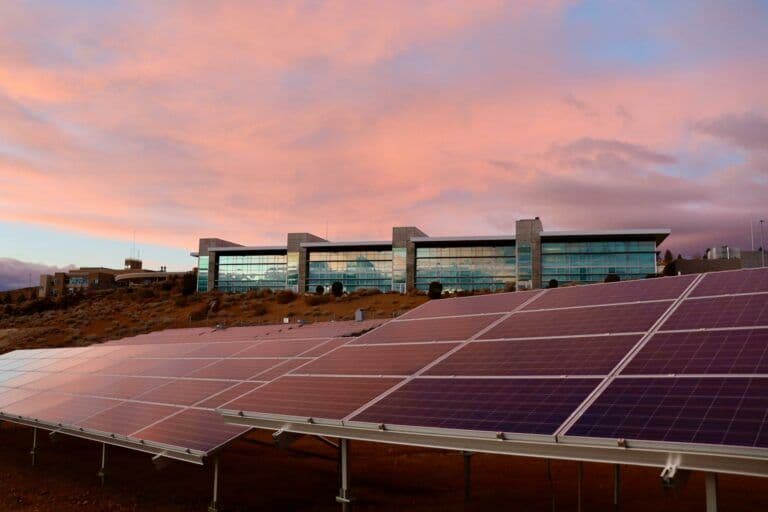
The choice between installing photovoltaic panels on flat roofs and using ground-mounted structures depends on many factors, such as available space, installation costs, energy efficiency, and local site conditions. This article outlines the main advantages and disadvantages of both solutions to help make an informed decision.
Photovoltaics on flat roofs
Installing photovoltaic panels on flat roofs is a popular solution, especially in urban areas. Flat roofs offer specific advantages that can outweigh some limitations.
Zalety konstrukcji na dach płaski
- Efficient use of existing space – Installing panels on a flat roof makes use of otherwise unused surface area.
- Space savings – No valuable ground space is occupied, which is especially important in densely built environments.
- Lower installation costs – Compared to ground-mounted systems, flat roof installations often require less site preparation, as no foundations are needed.
- Increased security – Panels installed on roofs are less exposed to vandalism or theft, improving overall system safety.
Disadvantages of flat roof PV systems
- Limited surface area – The roof size may restrict the number of installed panels, which can be an issue for larger systems.
- Installation complexity – Flat roof systems often require specialized mounting solutions, such as AERO bridges or ballast systems, to ensure proper tilt and stability.
- Structural load – Additional weight from panels and mounting systems may require roof reinforcement, increasing overall costs.
Ground-mounted structures
Ground-mounted systems are an alternative to roof installations, especially suitable for locations with large available land areas. They offer several advantages that may make them more appropriate in certain scenarios.
Advantages of ground-mounted PV structures
- Design flexibility – Panels can be freely arranged to achieve optimal tilt and orientation, maximizing energy production.
- Easy maintenance – Ground-level access simplifies cleaning, servicing, and inspection.
- Scalability – Systems can be easily expanded as energy demand increases.
Disadvantages of ground-mounted PV structures
- Higher initial costs – Site preparation, foundations, and structural installation increase upfront investment.
- Land usage – Ground-mounted systems occupy usable land that could otherwise serve agricultural, recreational, or construction purposes.
- Environmental and visual impact – Such installations may affect landscape aesthetics and local ecosystems, particularly in high-value natural areas.
How to choose the right structure?
Selecting the appropriate PV mounting system is essential for maximizing efficiency and ensuring long-term durability. Key factors include:
1. Roof or terrain type
Flat roofs – Require systems that ensure optimal tilt, such as ballast structures, double-threaded screw systems, AERO bridges, or adhesive-mounted solutions.
Sloped roofs – Use adjustable hooks, rail systems, or solutions adapted to tile and metal roofing.
Ground installations – Require robust steel structures ensuring stability and optimal sun exposure.
2. Structural materials
Stainless steel / aluminum – Durable and corrosion-resistant, ensuring long system lifespan.
Magnelis steel – A modern material offering enhanced corrosion resistance, widely used in advanced PV structures.
3. Tilt angle and orientation
In Poland, the optimal tilt angle is typically between 30° and 40°. Panels should face south to achieve maximum solar exposure.
4. Cost and budget
Different systems vary in installation and maintenance costs. Both initial investment and long-term operating expenses should be considered.
5. Regulations and compliance
Always ensure the selected structure complies with local building codes and photovoltaic installation standards, including necessary permits and safety requirements.
Summary
The choice between flat roof photovoltaics and ground-mounted systems depends on individual needs and site conditions. Flat roofs offer space efficiency and potentially lower installation costs but are limited by available surface and structural constraints. Ground-mounted systems provide greater flexibility and easier maintenance but require more space and higher upfront investment.
Ultimately, the decision should consider available space, budget, energy demand, and local conditions to ensure an efficient and durable photovoltaic installation.